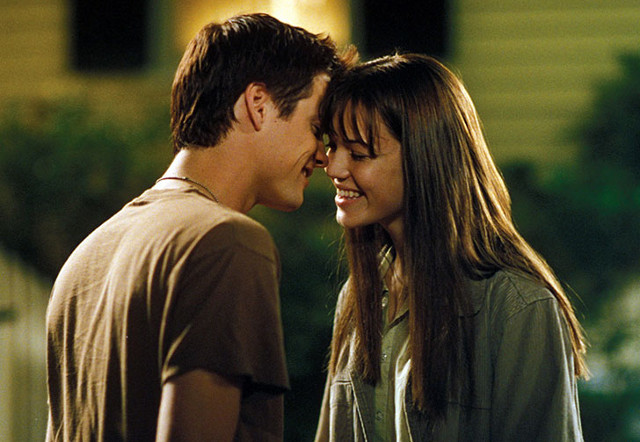
A Walk to Remember (2002)

The story of two North Carolina teens, Landon Carter and Jamie Sullivan, who are thrown together after Landon gets into trouble and is made to do community service.

Directed by: Adam Shankman

Screenplay by: Karen Janszen

Starring: Shane West, Mandy Moore, Peter Coyote, Daryl Hannah
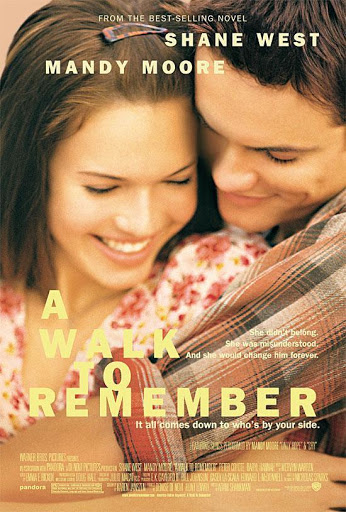
“A Walk to Remember” is a love story so sweet, sincere and positive that it sneaks past the defenses built up in this age of irony. It tells the story of a romance between two 18-year-olds that is summarized when the boy tells the girl’s doubtful father: “Jamie has faith in me. She makes me want to be different. Better.” After all of the vulgar crudities of the typical modern teenage movie, here is one that looks closely, pays attention, sees that not all teenagers are as cretinous as Hollywood portrays them.

The singer Mandy Moore, a natural beauty in both face and manner, stars as Jamie Sullivan, an outsider at school who is laughed at because she stands apart, has values, and always wears the same ratty blue sweater. Her father (Peter Coyote) is a local minister. Shane West plays Landon Carter, a senior boy who hangs with the popular crowd but is shaken when a stupid dare goes wrong and one of his friends is paralyzed in a diving accident. He dates a popular girl and joins in the laughter against Jamie. Then, as punishment for the prank, he is ordered by the principal to join the drama club: “You need to meet some new people.” Jamie’s in the club. He begins to notice her in a new way. He asks her to help him rehearse for a role in a play. She treats him with level honesty. She isn’t one of those losers who skulks around feeling put upon; her self-esteem stands apart from the opinion of her peers. She’s a smart, nice girl, a reminder that one of the pleasures of the movies is to meet good people.

The plot has revelations that I will not reveal. Enough to focus on the way Jamie’s serene example makes Landon into a nicer person–encourages him to become more sincere and serious, to win her where she approaches him while he’s with his old friends and says, “See you tonight,” and he says, “In your dreams.” When he turns up at her house, she is hurt and angry, and his excuses sound lame even to him.

The movie walks a fine line with the Peter Coyote character, whose church Landon attends. Movies have a way of stereotyping reactionary Bible-thumpers who are hostile to teen romance. There is a little of that here; Jamie is forbidden to date, for example, although there’s more behind his decision than knee-jerk strictness. But when Landon goes to the Rev. Sullivan and asks him to have faith in him, the minister listens with an open mind.

Yes, the movie is corny at times. But corniness is all right at times. I forgave the movie its broad emotion because it earned it. It lays things on a little thick at the end, but by then it had paid its way. Director Adam Shankman and his writer, Karen Janszen, working from the novel by Nicholas Sparks, have an unforced trust in the material that redeems, even justifies the broad strokes. They go wrong only three times: (1) The subplot involving the paralyzed boy should have either been dealt with, or dropped; (2) It’s tiresome to make the black teenager use “brother” in every sentence, as if he is not their peer but was ported in from another world; (3) As Kuleshov proved more than 80 years ago in a famous experiment, when an audience sees an impassive closeup, it supplies the necessary emotion from the context. It can be fatal for an actor to try to “act” in a closeup, and Landon’s little smile at the end is a distraction at a crucial moment.

Those are small flaws in a touching movie. The performances by Moore and West are so quietly convincing we’re reminded that many teenagers in movies seem to think like 30-year-old standup comics. That Jamie and Landon base their romance on values and respect will blindside some viewers of the film, especially since the first five or 10 minutes seem to be headed down a familiar teenage movie trail. “A Walk to Remember” is a small treasure.

Taken from Roger Ebert

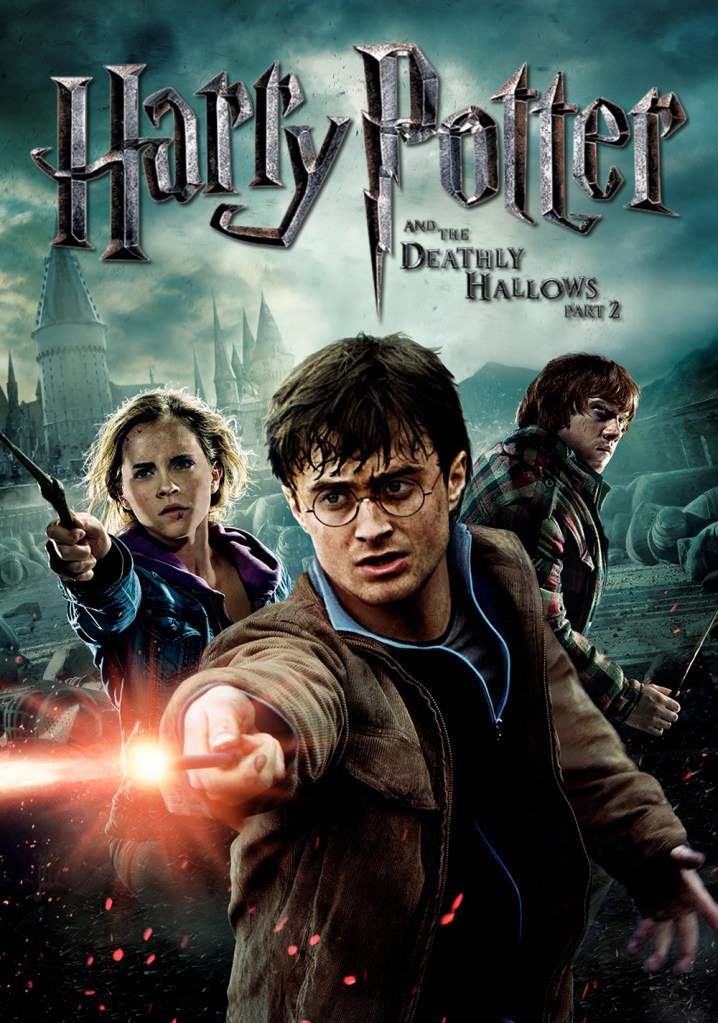
Harry Potter and the Deathly Hallows – Part 2 (2011)

Harry, Ron and Hermione search for Voldemort’s remaining Horcruxes in their effort to destroy the Dark Lord as the final battle rages on at Hogwarts.

Directed by: David Yates

Screenplay by: Steve Kloves

Starring: Daniel Radcliffe, Rupert Grint, Emma Watson, Helena Bonham Carter, Robbie Coltrane, Warwick Davis, Ralph Fiennes, Michael Gambon, John Hurt, Jason Isaacs, Gary Oldman, Alan Rickman, Maggie Smith, David Thewlis, Julie Walters

“It all ends,” says the poster slogan. A potentially grim statement of the obvious, of course, yet the Potter saga could hardly have ended on a better note. With one miraculous flourish of its wand, the franchise has restored the essential magic to the Potter legend – which had been starting to sag and drift in recent movies – zapping us all with a cracking final chapter, which looks far superior to CS Lewis’s The Last Battle or JRR Tolkien’s The Return of the King. It’s dramatically satisfying, spectacular and terrifically exciting, easily justifying the decision to split the last book into two.

Here is where the Harry Potter series gets its groove back, with a final confrontation between Voldemort (Ralph Fiennes) and our young hero, and with the sensational revelation of Harry’s destiny, which Dumbledore had been keeping secret from him. When stout-hearted young Neville Longbottom (a scene-stealer from Matthew Lewis) steps forward to denounce the dark lord in the final courtyard scene, I was on the edge of my seat. And when, in that final “coda”, the middle-age Harry Potter gently hugs his little boy before sending him off for his first term at Hogwarts – well, what can I say? I think I must have had something in my eye.

The colossal achievement of this series really is something to wonder at. The Harry Potter movies showed us their characters growing older in real time: unlike Just William or Bart Simpson, Daniel Radcliffe’s Harry was going to grow up like a normal person and never before has any film – or any book – brought home to me how terribly brief childhood is. The Potter movies weren’t just an adaptation of a series of books, but a living, evolving collaborative phenomenon between page and screen. The first movie, Philosopher’s Stone, came out in 2001, when JK Rowling was working on the fifth book, Order of the Phoenix, and when no one – perhaps not even the author herself – knew precisely how it was going to end. The movies developed just behind the books, and it’s surely impossible to read them without being influenced by the films. This is most true for Robbie Coltrane’s endlessly lovable, definitive performance as Hagrid.

In this final episode, Harry (Radcliffe), Hermione and Ron continue their battle to find and destroy the “horcruxes” that the sinister Voldemort needs so he can stay alive for all eternity: these are objects in which the fragments of souls are trapped and whose vital, spiritual force Voldemort, that hateful parasite, can siphon off for his own ends. Harry and his friends track down these horcruxes, but the last one is a puzzle. As the forces of good assemble at Hogwarts for the final showdown with Voldemort and his hordes, Harry knows only that the most vital horcrux is actually in the castle, very close at hand.

There are some superb set-piece scenes – and now the plot has so much more zing, these scenes have a power that comparable moments in earlier movies did not have. When Harry, Ron and Hermione insinuate themselves into Gringotts Bank to steal the sword of Gryffindor, the effect is bizarre, surreal and macabre: drawing on the influence of Lewis Carroll and Terry Gilliam. It is a great moment when Severus Snape, played with magnificently adenoidal disdain by Alan Rickman, is attacked by Voldemort’s snake Nagini, and we witness this only from behind a frosted glass screen – a nice touch from director David Yates. London-dwelling Potter fans will, as before, be intrigued to see how the ornate St Pancras railway station is used to represent King’s Cross, from where the Hogwarts train traditionally departs. Millions of tourists are undoubtedly convinced that this building is, in fact, King’s Cross. It may be forced simply to change its name.

We get passionate, but somehow touchingly innocent screen kisses between Harry and Ginny and, of course, between Ron and Hermione. In the midst of the battle, Neville declares that he is going to find Luna for a snog: “I’m mad about her! About time I told her, since we’re both probably going to be dead by dawn!” But these love stories are always subordinate to the all-important battle between good and evil.

The crucial moment of the film is where, I admit, I have a quibble: it is gripping and even moving when Harry realises what his destiny is, and sets out to fulfil it. Yet the exact rationale for his ultimate survival may be a little obscure, and perhaps even Potter-diehards may suspect that in the film there is a touch of having your cake and eating it. Well, no matter. This is such an entertaining, beguiling, charming and exciting picture. It reminded me of the thrill I felt on seeing the very first one, 10 years ago. And Radcliffe’s Harry Potter has emerged as a complex, confident, vulnerable, courageous character – most likable, sadly, at the point where we must leave him for ever. Wait. I’ve got that darn thing in my eye again…

Taken from The Guardian

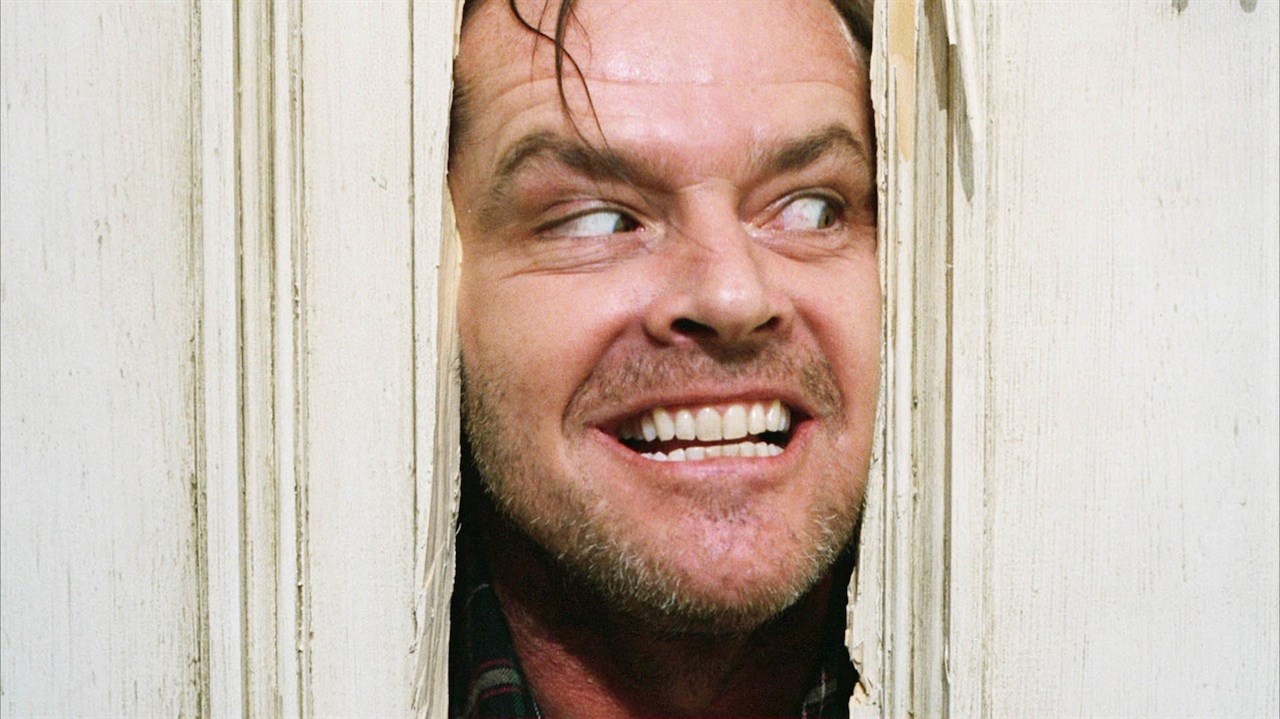
The Shining (1980)

A family heads to an isolated hotel for the winter where a sinister presence influences the father into violence, while his psychic son sees horrific forebodings from both past and future.

Directed by: Stanley Kubrick

Screenplay by: Stanley Kubrick, Diane Johnson

Starring: Jack Nicholson, Shelley Duvall, Scatman Crothers, Danny Lloyd

Stanley Kubrick’s indelible take on both the horror genre and the popular fiction of Stephen King, The Shining is both a radical distillation of its source novel’s densely stuffed ghosts-and-gore imagery as well as a conflation of its hidden central theme of the true-life horrors of domestic abuse. The result is a film that, though it ignores almost every major spook-show episode in the novel (nope, no teeming wasp’s nest here), enhances everything that’s legitimately unnerving about King’s book: the sour grin of a desperate middle-aged man contemplating his overwhelming vocational failure, the inability for families to truly forgive even speculatively accidental physical violence, and the eerie juxtaposition of snowbound isolation within a vast architectural agora, a place where you can hide but you can’t run.

The Shining is nominally about ex-alcoholic Jack Torrance (Jack Nicholson), the aforementioned failure as a patriarch, who, as he reveals in a moment of anger late in the film, sees himself as a great novelist but has nothing published to his name as he makes ends meet shoveling show and washing cars, silently blaming his stalled dream career on his wife Wendy (Shelley Duvall) and young, psychic son Danny (Danny Lloyd). (In the book, he lost his job as a teacher when he beat up a student.) When he stumbles on a temp job as the winter caretaker for a Rocky Mountain resort hotel that, due to the impossibility of clearing the road during snowy season, has to shut down for half a year, he sees an opportunity to, with his wife’s help, keep the hotel’s gears grinding while he spends all his free time in front of the typewriter. Eventually, it becomes increasingly clear that the Overlook Hotel’s gears are apparently spinning out of control, while the cogs in the creative side of Jack’s brain have grinded to a halt.

But themes and plot, as with many Kubrick films, are in service of the filmic form, not vice versa. In other words, themes in The Shining arise due to Kubrick’s almost fastidious concentration on form. (Some sources say this is still the film which holds Kubrick’s record for most takes on a single shot, though the numbers and the shot in question vary; according to the DVD commentary track, it’s over 140 takes on a two-shot of the conversation over ice cream between Danny Lloyd and Scatman Crothers.) Owing a massive debt to the still-new Steadicam device, The Shining’s gliding, prowling cinematography gives off the impression of momentum even as the three main characters are stalling out, letting tedium and seclusion open up all their festering familial resentments. One early sequence places Wendy and Danny within the bowels of the Overlook’s overtly Jungian hedge maze. Jack, frustrated and spending all his writing time in the hotel lobby throwing a tennis ball against the wall, strolls over to a model of the maze. A POV shot of Jack’s overhead gaze tracks in slowly until you notice that the two tiny figures of Wendy and Danny are wandering at the center of the shot. It’s a memorable summary image for their situation—even given a foreshadowing moment of seeming omniscience, Jack can’t free himself from his family any more than his family can escape the sprawling maze—and it’s punctuated by the fact that it is one of the only trick shots in the entire film.

The carefully organized, seamlessly edited tracking shots and the complex musical textures of György Ligeti and Krzysztof Penderecki don’t even offer room to breathe, and the disorientation causes the mind to grasp for gravity. One of my favorite analyses of The Shining goes on at great length about how the entire film is an extended metaphor for the systematic slaughter of Native Americans. I don’t know what’s scarier: that the key to unlocking the misery of generations along the nation’s Trail of Tears is a highball glass filled with bourbon (accompanied by muttering about “white man’s burden,” as Jack muses to Lloyd, the ghost bartender), that Kubrick would expect audiences to pay attention to the logo on a can of cleanser as a crucial metaphor, or that the entire well-supported analysis actually makes a damned lot of sense.

It’s the experience more so than the actual content of The Shining that radiates cold, anti-humanly indifferent terror. But Kubrick does hedge his bets by building in ambiguities, winding up in the film’s final question mark of a shot (so wholly different from the sunny ending of King’s novel that you can sort of empathize with the author when he speaks out against Kubrick’s adaptation). Having conflated the sadistic struggle between a man and his family into a horrific epic tragedy, Kubrick ultimately slaps the film back into a reversal of 2001: Space Odyssey’s coda, swapping accelerated evolution in favor of a regression so primordially violent it disrupts the fabric of time. In that sense, the film’s chronological Mobius warp places it outside of the context of something like The Haunting and more in line with Last Year in Marienbad (itself a pretty terrifying film, at least on the surface). Like Resnais’s gothic nightmare, Kubrick’s The Shining dwells at the outer limits of what can be thought of as a genre film, stretching the definition, filling it out, leaving it richer in its wake.

Taken from Slant Magazine